Financial Forecasting: What Is My Money Going to Do Next?
The Keacast Philosophy Series – Episode 4 The Most Important Question in Personal Finance Meta Description: Discover why asking "What is my money going to do next?" can transform your financial forecasting, improve cash flow planning, and help you make better financial decisions. URL Slug: /keacast-philosophy/what-is-my-money-going-to-do-next Primary Keyword: Financial Forecasting Secondary Keywords: Cash Flow Planning, Future Cash Flow, Financial Planning, Planning Expenses, Paycheck...
The Keacast Philosophy Series – Episode 4
The Most Important Question in Personal Finance
Meta Description: Discover why asking "What is my money going to do next?" can transform your financial forecasting, improve cash flow planning, and help you make better financial decisions.
URL Slug: /keacast-philosophy/what-is-my-money-going-to-do-next
Primary Keyword: Financial Forecasting
Secondary Keywords: Cash Flow Planning, Future Cash Flow, Financial Planning, Planning Expenses, Paycheck Planning, Financial Confidence
The Question Almost Everyone Asks
Open your banking app for just a moment.
Where do your eyes go first?
For almost everyone, it's the same place.
Your checking account balance.
Without even realizing it, your mind asks a familiar question.
"How much money do I have?"
It seems like the obvious question.
After all, how else could you know whether you're doing okay financially?
But here's something worth considering.
What if that isn't the question you're really trying to answer?
Your Bank Balance Looks Backward
Your current balance represents everything that has already happened.
The paycheck that already arrived.
The bills that have already cleared.
The purchases you've already made.
The deposits you've already received.
It's a snapshot of your financial past.
There's nothing wrong with that.
In fact, it's incredibly useful.
But your bank balance cannot answer one of the most important questions in financial forecasting.
What happens next?
The Decision You're Really Trying to Make
Imagine you're standing in a store holding something you've wanted for weeks.
Before heading to the checkout, you pause.
"Can I afford this?"
Most people believe they're asking about today's money.
They're not.
They're actually asking something much deeper.
"If I buy this today... what happens tomorrow?"
Will my mortgage still clear?
Will my insurance payment still be covered?
Will I have enough for groceries next week?
Will my paycheck arrive before my next major expense?
Notice what happened.
The question shifted from today's balance to future cash flow.
That's where better financial decisions begin.
Every Decision Reaches Into Tomorrow
Money never stops moving.
Every purchase changes something in the future.
Every paycheck creates new possibilities.
Every bill claims part of tomorrow's income.
Every savings contribution creates future opportunities.
Whether we realize it or not, every financial decision stretches beyond today.
That's why cash flow planning matters so much.
It helps us understand not just today's balance—but tomorrow's consequences.
One Question Changes Everything
Imagine replacing one familiar question with another.
Instead of asking,
"How much money do I have?"
Ask,
"What is my money going to do next?"
Notice how differently your mind begins to work.
Instead of focusing on ownership, you begin thinking about movement.
Instead of looking only at today's dollars, you begin considering tomorrow's responsibilities.
Instead of reacting, you begin preparing.
One question changes your perspective.
And perspective changes decisions.
Why This Question Feels So Different
Most financial questions evaluate the past.
Did I overspend?
Did I stay within my budget?
Did I save enough?
Those are valuable questions.
But they all look backward.
The question,
"What is my money going to do next?"
looks forward.
It invites planning instead of regret.
Awareness instead of anxiety.
Preparation instead of reaction.
That's the heart of financial forecasting.
Your Money Already Has a Destination
Think about your next paycheck.
Long before it arrives, much of it already has a purpose.
Some will pay your mortgage.
Some will cover groceries.
Some will be reserved for gasoline.
Some will pay insurance.
Some may go toward savings.
Some may help fund an upcoming vacation.
The dollars haven't arrived yet.
But mentally, they've already been assigned.
That's exactly how paycheck planning works.
The challenge is that most people keep that entire plan inside their memory.
Eventually, memory becomes overwhelmed.
Better Questions Lead to Better Financial Planning
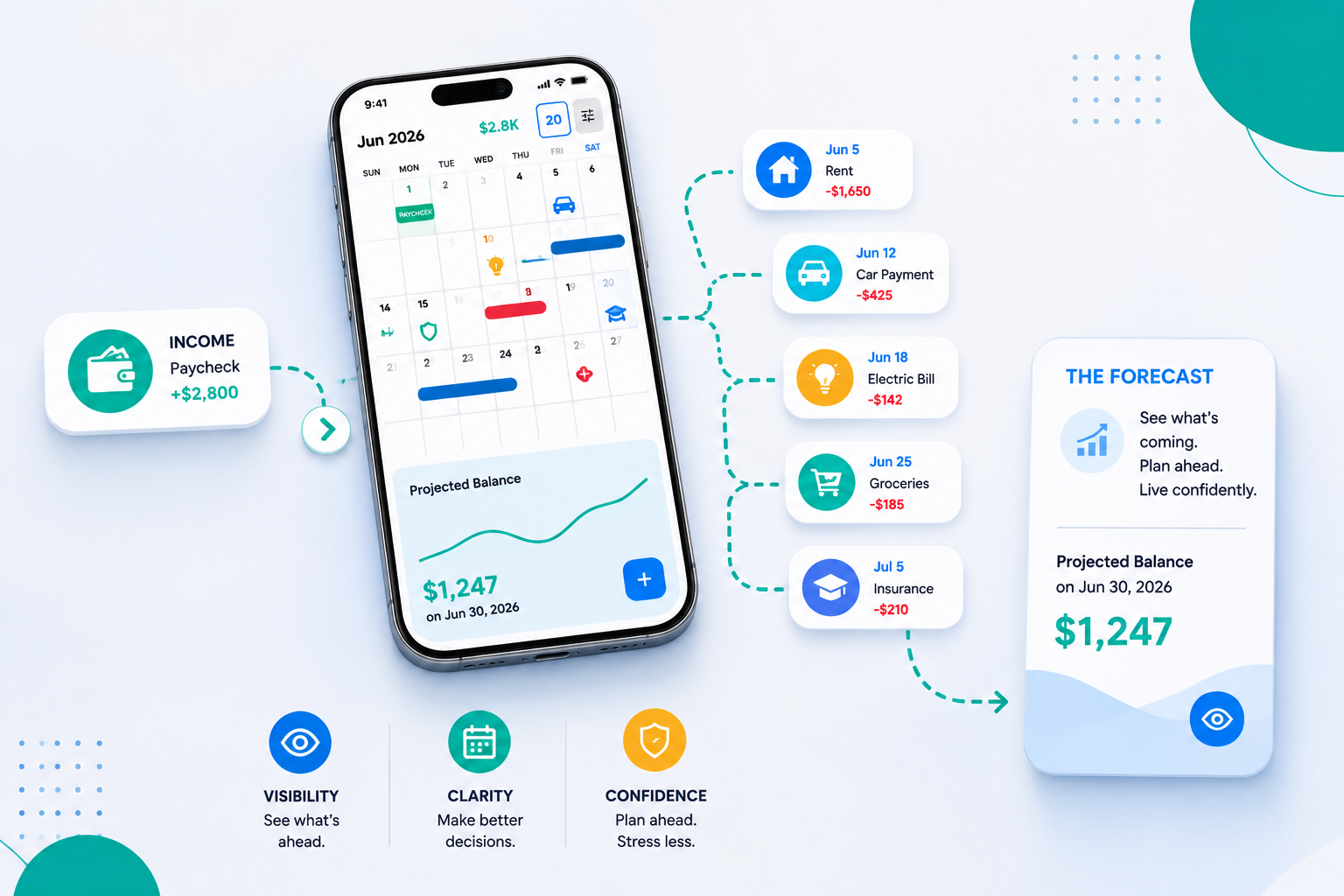
Throughout history, some of the greatest breakthroughs have started with someone asking a better question.
Personal finance is no different.
Sometimes improving your financial life isn't about earning more money.
Sometimes it's about asking a question that helps you see your money differently.
Instead of asking,
"How much do I have?"
Ask,
"What is my money going to do next?"
That simple shift encourages better financial planning, better cash flow management, and ultimately greater financial confidence.
A Small Habit That Can Change Everything
The next time you receive your paycheck…
Before making a purchase…
Before planning a vacation…
Before signing up for another subscription…
Pause for just a few seconds and ask yourself:
"What is my money going to do next?"
Not tomorrow's balance.
Tomorrow's story.
Because every dollar is already traveling toward something.
The better you understand that journey, the better today's decisions become.
Continue Your Financial Forecasting Journey
By now, we've learned that money is a flow.
We've discovered that every dollar has both an amount and a date.
And we've started asking a better question:
What is my money going to do next?
But asking a better question creates a new challenge.
How do you actually see the answer?
Your bank balance can't show it.
A transaction list can't show it.
Even a spreadsheet can make it difficult to understand at a glance.
Perhaps the problem isn't missing information.
Perhaps it's how we've been looking at it.
In the next chapter, Financial Forecasting: The Power of Seeing Money on a Calendar, we'll explore why organizing your finances around time instead of transactions can dramatically improve cash flow planning, simplify future expense planning, and build lasting financial confidence.
Related Keacast Resources
Continue learning how financial forecasting can improve your personal cash flow planning:
- Keacast Homepage – Discover a different philosophy of personal finance Keacast.app.
- Financial Forecasting Features – Learn how forecasting connects today's decisions to tomorrow's outcomes.
- Forecasting Calendar – Visualize future cash flow and upcoming expenses on a daily calendar.
- Reconciliation – See how your financial forecast stays connected to actual bank activity.
- Shopping Lists – Plan everyday purchases while keeping future cash flow in view.
- Pricing – Explore subscription plans designed for better financial planning. Note: No Credit Card needed, first 90 days are free no obligation.
- Episode 5: Financial Forecasting: The Power of Seeing Money on a Calendar – Continue the Keacast Philosophy Series.