Financial Forecasting: Why Money Is a Flow, Not a Pile
The Keacast Philosophy Series – Episode 2 Meta Description:Learn why thinking of money as a flow instead of a pile can improve cash flow planning, financial forecasting, and your confidence about future expenses. URL Slug:/keacast-philosophy/money-is-a-flow-not-a-pile Primary Keyword:Financial Forecasting Secondary Keywords:Cash Flow Planning, Personal Cash Flow, Future Cash Flow, Cash Flow Management, Planning Expenses, Financial Confidence We Think About Money the Wrong Way Close your eyes...
The Keacast Philosophy Series – Episode 2
Meta Description:Learn why thinking of money as a flow instead of a pile can improve cash flow planning, financial forecasting, and your confidence about future expenses.
URL Slug:/keacast-philosophy/money-is-a-flow-not-a-pile
Primary Keyword:Financial Forecasting
Secondary Keywords:Cash Flow Planning, Personal Cash Flow, Future Cash Flow, Cash Flow Management, Planning Expenses, Financial Confidence
We Think About Money the Wrong Way
Close your eyes for a moment and picture your money.
What comes to mind?
For most people, it's a number.
The balance in a checking account.
The amount in savings.
The total displayed in a banking app.
We've been taught to think of money as something that sits still—a pile that grows when we're paid and shrinks when we spend.
That picture feels natural because it's how banks present our finances.
One balance.
One number.
One moment in time.
But that picture is incomplete.
Money was never meant to sit still.
Money is always moving.
Understanding that simple truth changes the way we think about financial forecasting, cash flow planning, and nearly every financial decision we make.
Your Bank Balance Is Only a Snapshot
Imagine taking a single photograph of a busy highway.
You can see every vehicle that happened to be there at that exact moment.
But can you tell where those vehicles came from?
Can you tell where they're going?
Of course not.
A photograph captures a moment.
It doesn't capture movement.
Your bank balance works exactly the same way.
It tells you how much money you have today.
It cannot tell you what that money will be doing tomorrow.
That's why so many people feel uncertain, even when they have money in the bank.
Money Behaves Like a River
Imagine standing beside a river.
The water constantly moves.
Some flows in.
Some flows out.
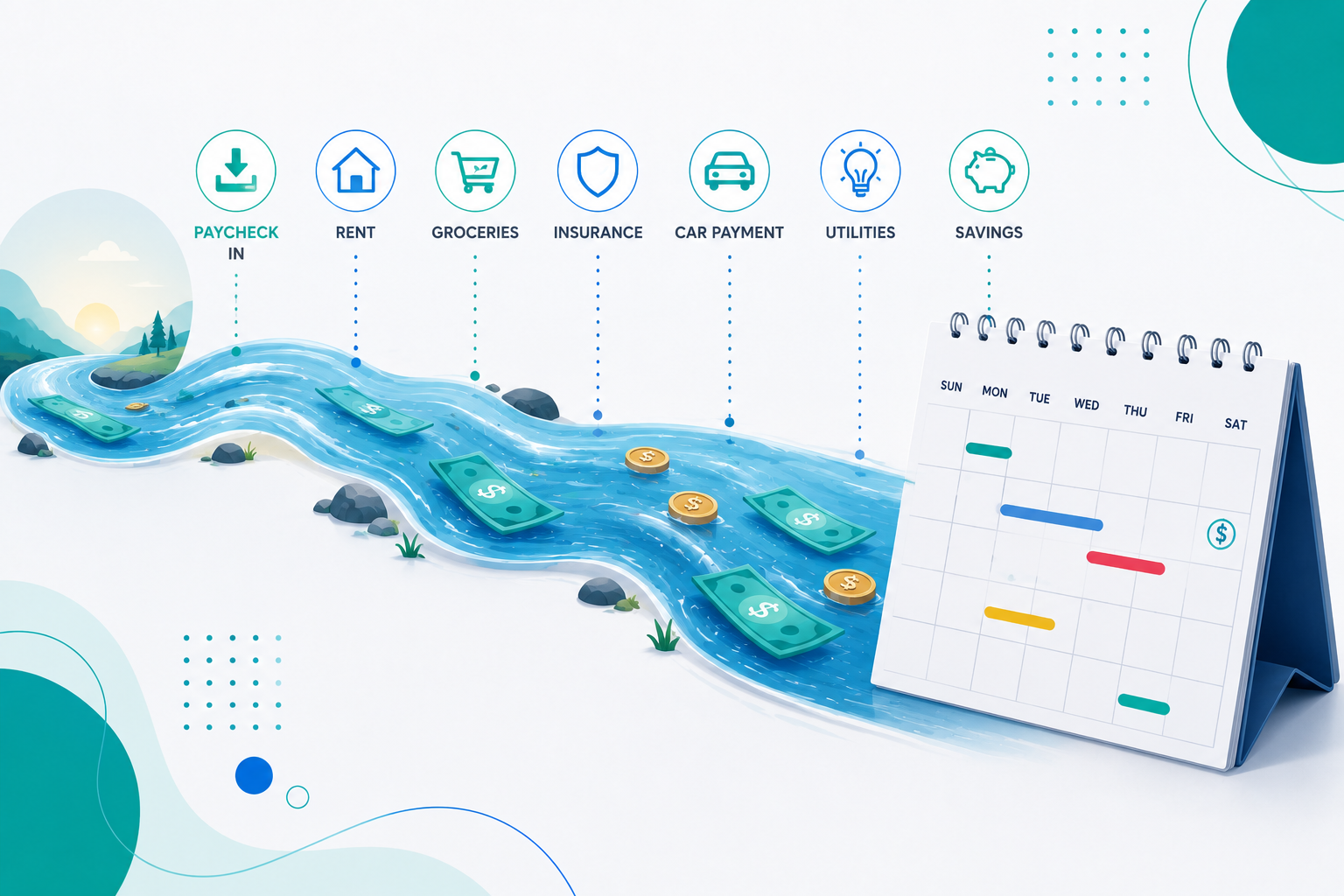
The river is never frozen in place.
Yet we still recognize it as the same river.
Personal cash flow works the same way.
Income flows into your account.
Rent flows out.
Utilities flow out.
Groceries flow out.
Insurance premiums flow out.
Tax refunds flow in.
Bonuses flow in.
Unexpected expenses appear without warning.
Your balance simply reflects the level of the river at one particular moment.
If you only focus on today's balance, you're missing the movement that creates tomorrow.
Why Cash Flow Planning Matters
Suppose you open your banking app and see $4,000.
That feels reassuring.
Then you remember:
Your mortgage is due tomorrow.
Your insurance drafts in three days.
Your electric bill is scheduled next week.
Your child's school fee is due Friday.
Nothing about your balance changed.
What changed was your understanding of your future cash flow.
The number itself wasn't enough.
You needed to understand where that money was already committed.
That's exactly what cash flow planning helps you see.
Stop Asking "How Much?"
Most people unconsciously ask one financial question every day.
"How much money do I have?"
It's a perfectly reasonable question.
It's simply incomplete.
A more useful question is:
"What is my money going to do next?"
Now your thinking shifts.
Instead of focusing on ownership, you begin thinking about movement.
Instead of looking only at today's balance, you begin considering tomorrow's responsibilities.
That's the beginning of financial forecasting.
Every Dollar Is Already Moving
Think about your most recent paycheck.
Did it remain a paycheck?
Probably not.
Some became rent.
Some became groceries.
Some became gasoline.
Some became savings.
Some became entertainment.
Some became insurance.
The money itself didn't disappear.
It simply continued moving toward the things that matter most in your life.
That's what money naturally does.
It flows.
Cash Flow Is More Important Than Most People Realize
Many people believe financial stress comes from spending too much.
Sometimes that's true.
But often the real issue is timing.
The bills arrive before the paycheck.
Several large expenses happen during the same week.
An unexpected repair interrupts carefully made plans.
This isn't always a spending problem.
It's often a cash flow management problem.
Two families earning the same income can experience completely different levels of financial confidence simply because one understands the timing of their cash flow while the other does not.
Seeing Movement Creates Better Decisions
Imagine watching a weather forecast.
The forecast doesn't change tomorrow's weather.
It changes today's preparation.
You carry an umbrella.
You postpone outdoor plans.
You leave earlier for work.
Financial forecasting serves the same purpose.
When you understand where your money is headed, today's decisions become easier.
You're no longer guessing.
You're planning.
A Different Way to Think About Financial Planning
Traditional financial tools often encourage us to think about balances.
At Keacast, we believe it's more helpful to think about movement.
Money isn't simply something you own.
It's something flowing toward future responsibilities, future opportunities, and future goals.
That's why cash flow planning and financial forecasting provide a different perspective than simply reviewing account balances.
The goal isn't to admire today's balance.
The goal is to understand tomorrow's journey.
Continue Your Financial Forecasting Journey
If money is truly a flow instead of a pile, then another fascinating question naturally appears.
Every dollar moving through your life carries more than just value.
It carries timing.
In the next chapter, Financial Forecasting: Why Every Dollar Has an Amount and a Date, we'll explore why understanding when your money will be needed may be just as important as understanding how much you have.