Transform Your Finances with Calendar-Based Forecasting Techniques
Managing money often feels like juggling invisible balls. Your bank balance shows what you have right now. Your budget lists what you spent in the past. But neither tells you what’s coming next. Bills arrive on different days, paychecks don’t come every day, and life follows a schedule. So why track your money in static lists and categories that don’t match how your finances actually flow? Calendar-based forecasting changes the way you see your money. Instead of reacting to surprises, you can...
Managing money often feels like juggling invisible balls. Your bank balance shows what you have right now. Your budget lists what you spent in the past. But neither tells you what’s coming next. Bills arrive on different days, paychecks don’t come every day, and life follows a schedule. So why track your money in static lists and categories that don’t match how your finances actually flow?
Calendar-based forecasting changes the way you see your money. Instead of reacting to surprises, you can plan ahead, spot tight weeks, and avoid stress. This post explains how using a calendar to track your income and expenses can transform your financial life.
Why Traditional Budgeting Falls Short
Most people use budgets that categorize spending by type: groceries, rent, entertainment. While this helps control expenses, it misses a crucial part: timing. Your paycheck might arrive on the 1st and 15th, but bills come scattered throughout the month. A budget won’t warn you if your balance dips dangerously low before your next paycheck.
For example, imagine you get paid on the 1st and 15th. Your rent is due on the 3rd, utilities on the 10th, and credit card payment on the 20th. If you only look at your bank balance today, you might think you have enough money. But if you don’t plan for the rent payment on the 3rd, you could face overdraft fees or missed payments.
Traditional budgeting shows what you spent last month but doesn’t forecast your cash flow. This gap can cause stress and financial surprises.
How Calendar-Based Forecasting Works
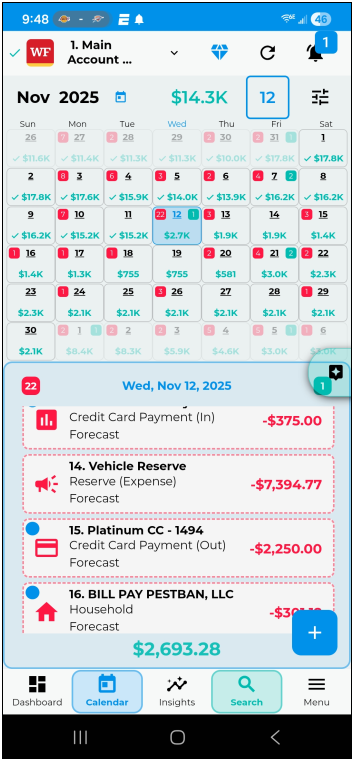
Calendar-based forecasting puts your money on a timeline. It shows when income arrives and when bills are due. This approach helps you:
- See income on the days it arrives
- See bills on the days they hit your account
- View your daily balance before it happens
- Spot tight weeks before they become stressful
By mapping your money on a calendar, you get a clear picture of your cash flow. You can plan spending, avoid overdrafts, and prepare for upcoming expenses.
Step-by-Step Example
- Mark your paydays Write down the exact days your paychecks arrive. For example, the 1st and 15th of each month.
- Add bill due dates Include rent, utilities, subscriptions, loan payments, and any other regular expenses.
- Estimate variable expenses Add expected grocery trips, gas, or other irregular costs on the days you usually spend.
- Calculate your daily balance Starting with your current bank balance, subtract bills and expenses as they come due, and add income on paydays.
- Review your calendar weekly Look for days when your balance might drop too low. Plan to cut back spending or move money around before those days.
Benefits of Seeing Your Money on a Calendar
Avoid Surprises
When you know exactly when money comes in and goes out, you won’t be caught off guard by a bill or a low balance.
Manage Cash Flow Better
You can plan purchases or bill payments around your income schedule. For example, delay a non-urgent purchase until after payday.
Reduce Stress
Financial stress often comes from uncertainty. Seeing your money on a calendar gives you control and confidence.
Spot Tight Weeks Early
If you notice a week where bills pile up and income is low, you can prepare by saving extra or adjusting spending.
Tools to Help You Get Started
Many apps and tools now support calendar-based financial tracking. Look for features like:
- Income and bill scheduling
- Daily balance forecasting
- Alerts for upcoming bills
- Visual calendar views
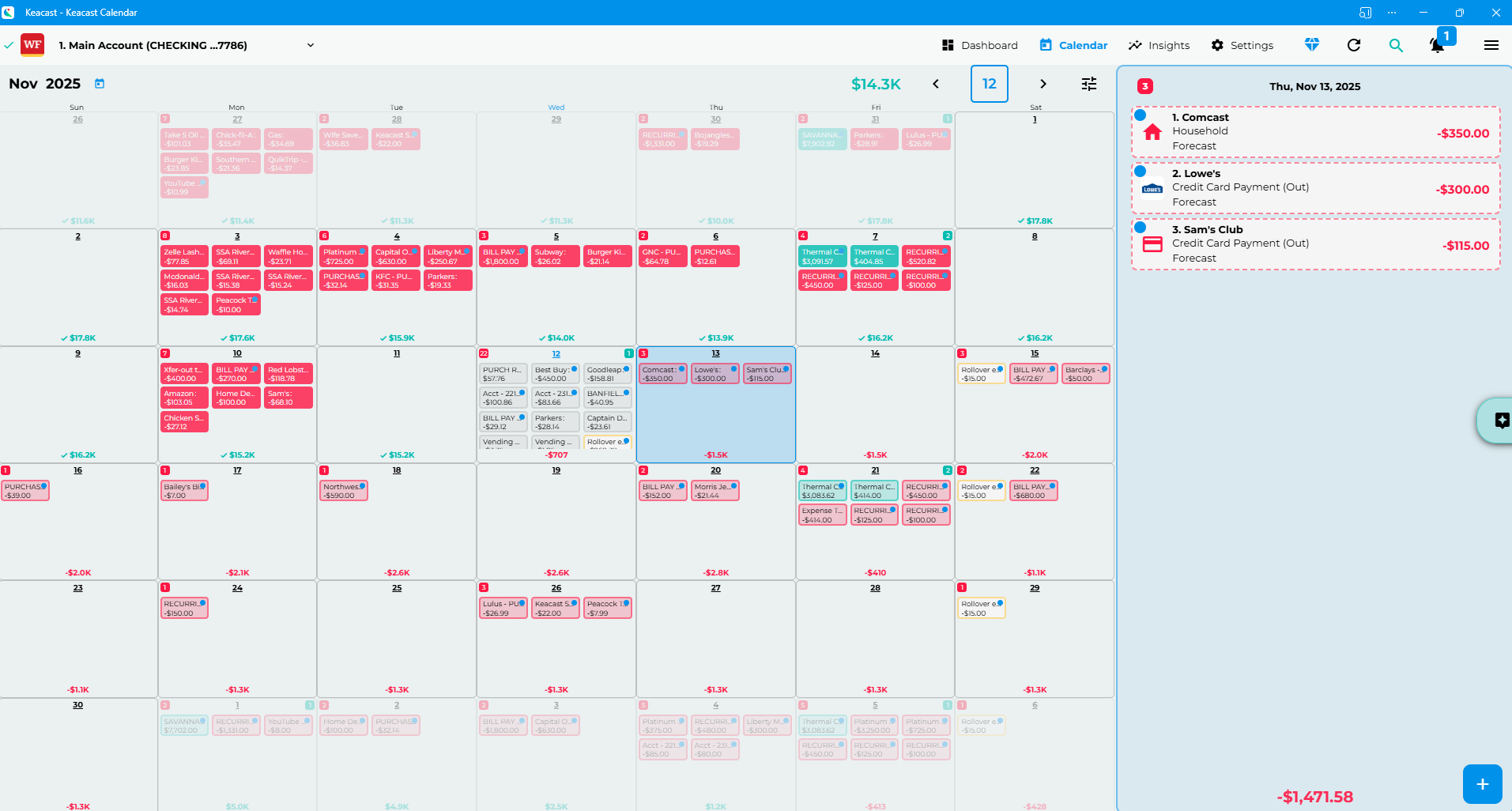
For example, Keacast offers a calendar where your finances live alongside your real life. It shows income and bills on the days they happen and forecasts your daily balance. This helps you stop reacting to money and start seeing your financial future clearly.
Practical Tips for Using Calendar-Based Forecasting
- Update your calendar regularly
Add new bills or income changes as soon as you know them.
- Include irregular expenses
Don’t forget annual insurance payments, car maintenance, or gifts.
- Use color coding
Different colors for income, fixed bills, and variable expenses make the calendar easier to read.
- Review your calendar weekly
Make it a habit to check your financial calendar before the week starts.
- Plan for emergencies
If you see a tight week coming, try to build a small buffer to avoid stress.
Real-Life Example
Sarah uses calendar-based forecasting to manage her freelance income. Her paychecks vary, and bills come on fixed dates. By marking her income and bills on a calendar, she can see when she might run low on cash. One month, she noticed a week with several bills but no income. She planned ahead by saving extra the previous month and avoided overdraft fees.
Tracking your money on a calendar matches how life happens. It shows you what’s coming, not just what’s happened. This simple shift can improve your financial control, reduce stress, and help you make smarter decisions.